Projects
Individual Development
To the project browser
TAM
The aim is to investigate the developmental trajectories of cognitive and motor adaptation across childhood, adolescence, young adulthood and old age. We have developed a new task that has proven to be appropriate and sensitive for investigating developmental and individual differences within specific age groups.
Strive-Up
The project examines the ideas parents of 6-10 year old children have about their child’s future social status (desire to maintain status vs. desire for upward mobility). We analyse to what extent the desire to maintain status vs. the desire for upward mobility differs according to socio-economic status (SES) and migration background, and what role this desire for status plays in parents’ educational aspirations and in the educational decisions made by families.
SEM
The SEM project, funded within the framework of the BMBF funding guideline ‘Language Education in the Immigration Society’, aims to develop, test and research a concept for language support in pre-primary classes. The project includes subject-integrated language support in the development of mathematical precursor skills in conjunction with the promotion of emotional understanding and emotion regulation, as well as a language support related professionalisation programme for teachers working in pre-school classes.

KoPaS
The project focuses on the individual support of primary school children from different learning backgrounds and languages of origin by the professionals involved in all-day schooling, as well as on gaining insights into the effects of lesson design on the individual development of pupils.

GUIDEPREP
The Europe-wide project ‘Growing Up in Digital Europe’ (GUIDE) analyses the success factors for the development of well-being in a digital world. Over a period of about 25 years, two birth cohorts (infants and school-age children) and their parents will be systematically surveyed. The upstream project GUIDEPREP (‘GUIDE Preparatory Phase’) will develop the necessary research infrastructure for the GUIDE panel between 2022 and 2026.
GeKiSch
This project analyses the importance of low-threshold schooling and learning opportunities in initial reception centres in Hesse for the development, learning and integration process of children and adolescents. The aim is to identify the psychosocial needs of children in the developmental phase of school age and ultimately the challenges for educational practice in the school context and to formulate recommendations for policy and practice.
EULe
The project “EULe – Erfolgreich Unterrichten mit Lernverlaufsdiagnostik” aims to support 10 primary schools in North Rhine-Westphalia in developing and implementing school-specific, data-based and adaptive support concepts based on learning progression diagnostics.
DigitLern
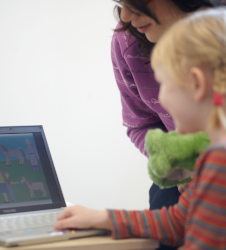
The DigitLern project aims to explore the opportunities and challenges of (digital) distance learning and teaching during the coronavirus pandemic for children and young people with learning difficulties.
BiLTex
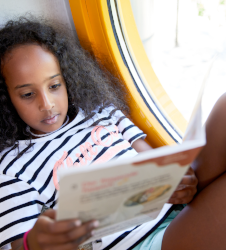
The IDeA project BiLTex investigates potential differences between bilingual and monolingual learning environments for text comprehension. Whereas in monolingual learning environments all information and actions are available or take place in German, in bilingual learning environments the mother tongue is systematically included. BilTex aims to investigate whether the inclusion of the language of origin has a positive effect on text comprehension and the learning experience of pupils growing up bilingually.
EABU
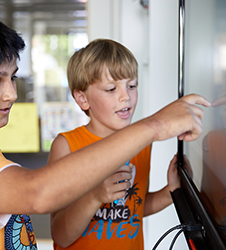
The research group aims to identify the causes of educational inequalities, analyse changes over time and identify the risks and opportunities of digitalization to reduce educational inequalities.