Projects
Individual Development
To the project browser
KonText
The KonText project investigates how grammatical features of texts and individual characteristics of readers (e.g. multilingualism) influence text comprehension. The focus is on the comprehension of linguistic means of indicating basic sequential relationships, so-called causal connectors (e.g. because, since, therefore). The project aims to find out (i) whether explicit labelling of causal relations facilitates text comprehension, (ii) for which causal connectors this is true, and (iii) which students benefit from this.

EAGLeS
The EAGLeS project focuses on the acquisition of written language skills when learning English as a foreign language in Years 5 and 6. It will look for systematic differences between children with reading and/or spelling difficulties and those without. This will be followed by the development and validation of an English diagnostic procedure.
MeBis
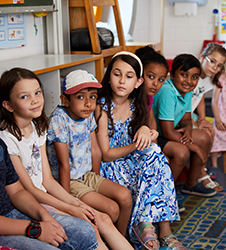
MeBis is a project examining the handling of and attitudes towards multilingualism in children, parents and teachers in primary education settings, particularly concerning the use of several languages, for learning at home and reading out to children, but also during lessons with a particular focus on grammar and language comparisons.

SPEAK-Phonology
The research project SPEAK-Phonology is a part of the joint project SPEAK (https://www.validierungsfoerderung.de/validierungsprojekte/speak). This part of the project focuses on developing standard values for a nonword repetiton test that was specifically constructed with multilingual children in mind. Standard values will be calculated for multilingual children between the ages of 4 and 8 and will take their individual biographies of acquisition into account.

TschAu
The project aims to develop a standardized achievement test for students in grades three to six, which can be used to assess specific competences and impairments in written expression.

WoBi
The project WoBi investigates how children with German as their second language (Age of Onset: 2–4 years and 6–7 years) acquire the typical stress patterns of German.
meRLe
The meRLe project explores ways to promote German reading skills using multilingual-sensitive reciprocal teaching in primary education.

LONDI (former OnDiFoe)
The project LONDI aims at developing a web-based platform to support the identification and treatment of children with major difficulties in learning to read, spell, and/or calculate. The platform will provide evidence-based information, materials and tools for learning disabilities screening as well as for the individual diagnosis and remediation.
iLearn
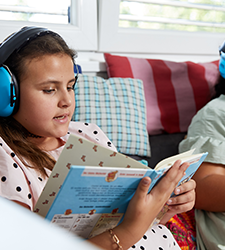
This project evaluates the potential of computerized formative assessment to support reading acquisition of children with reading difficulties. Formative assessment enables teachers to adapt their teaching methods to the individual learning progress of their students.

MoBiLe
The project investigates the role of language and executive functions in cognitive and academic development of elementary school children. The focus is on the comparison of monolingual and bilingual children (especially children from immigrant families), who often differ in terms of their language abilities as well as their academic achievement.