Projects
Individual Development
To the project browser
PROMPT
The PROMPT project is developing an evidence-based, child-friendly prototype of a learning planner application to support students in self-regulated learning with digital media. The final version of the prototype will be made freely available for widespread use.
INCLASS
The INCLASS project is developing an application-oriented set of tools for the inclusion of autistic children: a training platform for teachers, a self-assessment tool for the (self-)evaluation of competences in teaching children on the autism spectrum and a smartphone app for the identification of individual barriers.
GUIDEPREP
The Europe-wide project ‘Growing Up in Digital Europe’ (GUIDE) analyses the success factors for the development of well-being in a digital world. Over a period of about 25 years, two birth cohorts (infants and school-age children) and their parents will be systematically surveyed. The upstream project GUIDEPREP (‘GUIDE Preparatory Phase’) will develop the necessary research infrastructure for the GUIDE panel between 2022 and 2026.
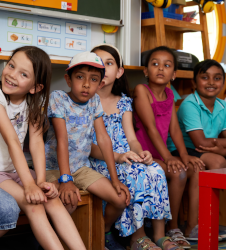
GeKiSch
This project analyses the importance of low-threshold schooling and learning opportunities in initial reception centres in Hesse for the development, learning and integration process of children and adolescents. The aim is to identify the psychosocial needs of children in the developmental phase of school age and ultimately the challenges for educational practice in the school context and to formulate recommendations for policy and practice.
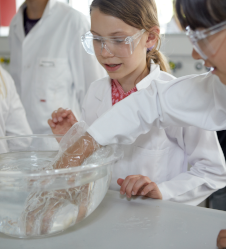
DIALOG
The DIALOG project accompanies a 1.5-year training programme on the implementation of discovery and inquiry-based learning for early childhood educators. Various methods (e.g. video observations and smartphone-based surveys) will be used to investigate the interaction and communication between the actors and the conditions for successful implementation of the programme content.

BiLTex
The IDeA project BiLTex investigates potential differences between bilingual and monolingual learning environments for text comprehension. Whereas in monolingual learning environments all information and actions are available or take place in German, in bilingual learning environments the mother tongue is systematically included. BilTex aims to investigate whether the inclusion of the language of origin has a positive effect on text comprehension and the learning experience of pupils growing up bilingually.
AppLeMat
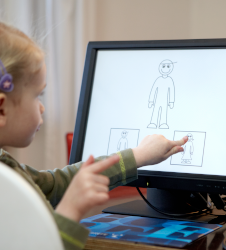
The AppLeMat project aims to develop and evaluate a therapeutic, tablet-based application as an adjunct to learning therapy.

GoThink
The project looks at how doing iconic gestures while processing sentences supports logical-abstract thinking in elementary school kids, and what role working memory plays in this.

Ada*Q
The research project “Adaptivity and teaching quality in individualized lessons” (Ada*Q) is part of the Robert Bosch Foundation’s “How does a good school work? – Research for practice” programme. The project investigates how individualized teaching in elementary school is implemented and designed at the schools that have won the German School Award.
EDUCAREplus
The research project aims at a better understanding of the persisting social inequality in children’s school success. The main focus is on socioeconomic differences in attitudes, beliefs, and practices of children, parents, and educators with regard to education and care in early and middle childhood.