Projects
Adaptive Education
To the project browser
ChiParNet
The ChiParNet project examines how children and parents mutually influence each other’s social networks. Instead of focusing solely on parental influence, ChiParNet explores how children’s friendships also shape their parents’ social worlds. For this purpose, children of various ages and their parents are surveyed a total of three times.
Ko-divers
The Ko-divers project aims to develop through an evaluation-based process, a practical, effective and diversity-sensitive teaching concept for cooperative learning using the design-based research approach within research-practice partnerships.
BRISE-Interaction Quality
The sub-project “BRISE Interaction Quality” examines how support from the family and preschools affects children’s development.
Startchancen SRL
As part of the scientific research accompanying the Startchancen programme, we are investigating how self-regulated learning can be promoted – especially among children from socially disadvantaged backgrounds.
MultiDynAssess-India
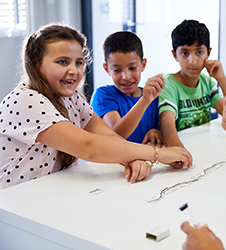
The project designs, implements, and evaluates multilingual dynamic assessment (DA) in Indian primary government schools where English is taught in a context characterised by high sociolinguistic diversity and widespread code-mixing practices. It investigates how multilingual versus English-only DA affects Grade 4 students’ language and content learning over time, drawing on classroom observations and a longitudinal comparison with traditional static assessment in schools in New Delhi and Guwahati. By aligning assessment with learners’ full linguistic repertoires, the project aims to promote equity in education and offers implications for multilingual assessment practices in India and other linguistically diverse contexts in the Global South.
CHAT2TRANSITION
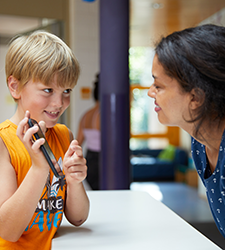
The project examines the emergence and consequences of educational decisions at the transition from primary to secondary school. It focuses on improving the information available to families and teachers. A multilingual chat assistant for families and a reflection program for teachers aim to reduce social and migration-related inequalities in educational outcomes.
SOGREV
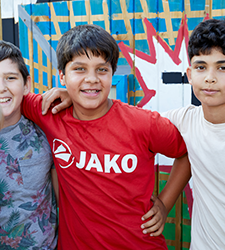
Restrictions on contact and curfews during the coronavirus pandemic meant that children and young people had much less opportunity to socialise. This quickly led to a complete lack of social contact with peers, especially for children and young people from socially disadvantaged backgrounds who were denied access to state institutions such as nurseries or schools […]
BRISE-School Readiness
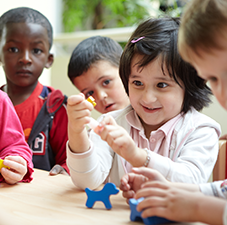
The sub-project of the second project phase (2025–2029) at DIPF is dedicated to the effects of the early childhood support chain on the development of basic skills in reading, spelling and arithmetic over the course of the primary school years.
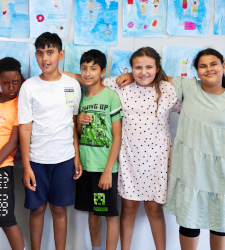
Young Children’s Worlds
This project will develop a questionnaire to quantitatively assess the well-being of children between the ages of 6 and 8. The study will be conducted in parallel in South Africa and Israel.
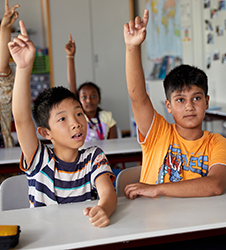
Strive-Up
The project examines the ideas parents of 6-10 year old children have about their child’s future social status (desire to maintain status vs. desire for upward mobility). We analyse to what extent the desire to maintain status vs. the desire for upward mobility differs according to socio-economic status (SES) and migration background, and what role this desire for status plays in parents’ educational aspirations and in the educational decisions made by families.