Projects
Adaptive Education
This domain focuses on learning arrangements in kindergarten, school, and informal educational settings.
To the project browser
RifA
The project is focused on the question what makes a childhood shaped by poverty particularly vulnerable. The research interest aims to the questions if children are different effected by vulnerability and transgression than adults as well as how the spatial-structured conditions of the growing up of children have an influence on it.
SchuWaMi
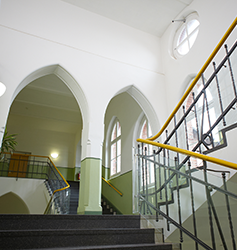
The SchuWaMi project investigates how schools in Germany have reacted to the increased admission of refugee children and young people, which institutional change processes have taken place and are still taking place in this context, and to what extent and how schools succeed in promoting the social participation of children and young people with refugee experience.
SelF
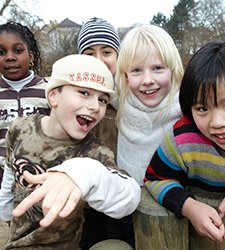
The project SelF deals with the implementation of specific self-regulatory strategies in different areas of application.
SLICE-UP
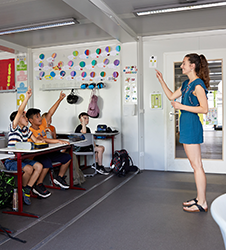
The SLICE-UP project is concerned with the ability to measure aspects of teaching quality using first impressions of untrained observers (so-called thin-slices ratings). Central aspects of teaching quality in classroom research are seen as the quality of learning-related interactions between teachers and students, such as the success of structured classroom management, constructive support from teachers, and lesson design that cognitively activates students.
SOGREV
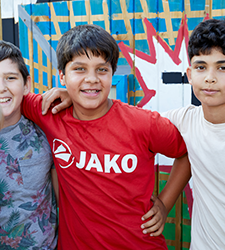
Restrictions on contact and curfews during the coronavirus pandemic meant that children and young people had much less opportunity to socialise. This quickly led to a complete lack of social contact with peers, especially for children and young people from socially disadvantaged backgrounds who were denied access to state institutions such as nurseries or schools […]
SprachFit
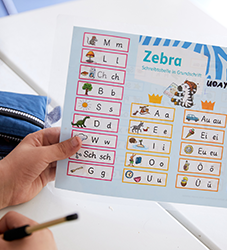
The acquisition of language skills is essential for overall child development. The “SprachFit” initiative aims to identify language deficits in children at an early stage and provide targeted support. The accompanying scientific evaluation study examines the implementation of the initiative and its impact on child development.

SpröM
The project SpröM evaluated the longitudinal effects of kindergarten support programs with regard to linguistic and metalinguistic competencies.

StaLApp
The StarLApp project is about the research-based development and qualitative research of the pre-version of an app for statistical learning in primary schools. The app is to be designed with regard to a learning path derived from theory and encourage learners to reason with statistical data.

Step-by-Step
A broad variety of professional modules, based on the psychoanalytical and interdisciplinary trauma research on the one hand and socio-pedagogical and educational concepts on the other hand, has been intended to offer “first steps” as a sort of first aid in the initial refugee reception Michaelisdorf and to initiate “second steps” to support the immediate and sustaining integration into Germany at the same time.
TeWiPrax
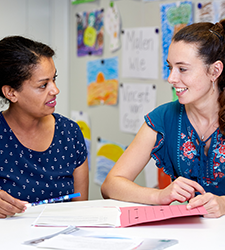
In the TeWiPrax project, researchers and teachers from the group „Sprachförderung/Mehrsprachigkeit“ of the “Campusschulen” program collaboratively develop and test materials that support secondary school students in understanding scientific texts. A particular focus is on academic and subject-specific vocabulary.